Mounting Block Machining
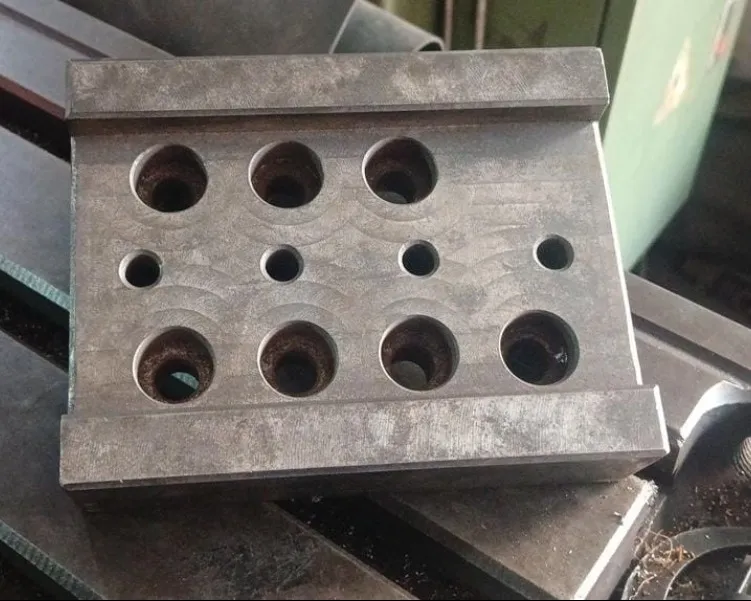
A mounting block is typically manufactured from aluminium, mild steel, EN8/C45, or another material specified on the drawing. The machining process depends on the block geometry and hole pattern.
Typical manufacturing process
- Raw material preparation
- Select plate or rectangular bar according to the drawing.
- Cut the material with machining allowance on all side.
2. First setup – CNC/VMC
- Clamp the workpiece securely.
- Face mill the top surface.
- Machine the reference datum surfaces.
- Rough and finish the outside profile.
3. Hole machining
- Spot drill all hole locations.
- Drill through/blind holes.
- Ream holes where close tolerance is required.
- Tap threaded holes according to the drawing.
- Pocket/slot machining
- Rough mill pockets and slots.
- Finish mill walls and floors.
- Machine counterbores/countersinks if specified.
- Second setup
- Re-clamp using the finished datum surfaces.
- Machine the remaining faces.
- Bring the overall thickness and critical dimensions to final size.
- Machine holes/features from the opposite side if required.
- Deburring
- Remove all machining burrs.
- Break sharp edges/chamfer as specified.
- Surface treatment
- Aluminium: anodizing if required.
- Steel: black oxide, zinc plating, painting, etc., depending on specification.
- Final inspection
- Overall length, width and thickness.
- Hole diameter and position.
- Thread size and depth.
- Pocket/slot dimensions.
- Flatness, perpendicularity and parallelism.
- Check the component against the mating assembly.
Typical process flow
Raw material → Saw cutting → Face milling → Datum machining → Profile milling → Drilling → Tapping → Pocket/slot milling → Finishing → Deburring → Surface treatment → Inspection
Keywords